Free, practical, evidence-based ideas from Thriving in Motion to help every child enjoy being active, whatever their starting point.
Most parents want the same things for their child – to be active, healthy and confident, and to grow up enjoying the way their body moves. It is easy to assume this means raising a child who is good at sport, but the evidence tells us that what sets a child up for a lifetime of activity is something every family can help build, and it has a name. It is called physical literacy.
Physical literacy is the motivation, confidence, movement skills and connection that allow a child to take part in active play and to keep choosing it as they grow.
Movement skill is only one part of that picture, and on its own it is a surprisingly weak predictor of who stays active. A child can be quite capable and still step back from activity because they do not enjoy it, or because they have decided they are not much good at it. A child who may not be the most skilled but enjoys moving, and who believes they can have a go, will tend to stay active for years. Across the research, motivation and confidence do much of the work.
The early years are when these foundations take shape. Some children take to movement readily, while others need more time, more encouragement, or simply a different way in. The reassuring part is that the tools to build physical literacy are ordinary, learnable and within reach of any family.
Five evidence based ideas to help your child build a lifelong relationship with movement
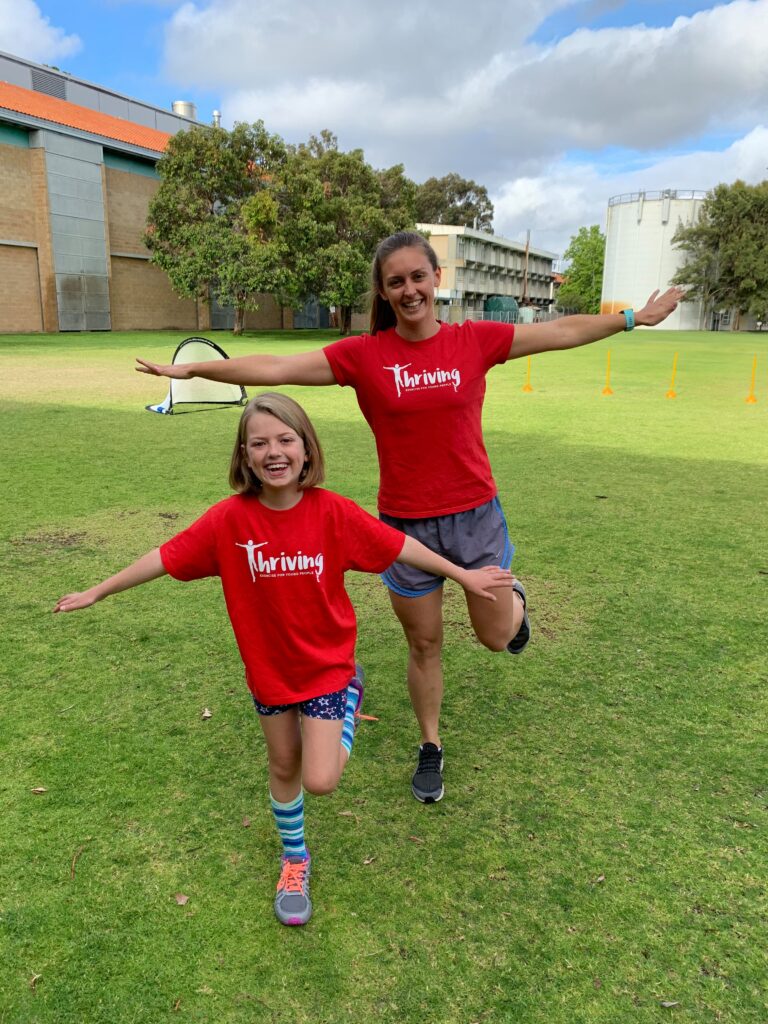
Children and young people stick to things they enjoy or find fun. That sounds obvious, but it is easy to lose sight of when we are worried about whether a child is active enough, and we end up encouraging the activities we think they should like rather than the ones they actually do.
Motivation grows when movement feels good, when a child has some say in it, and when they understand why it matters to them and not only to us.
Three things help in everyday life:
Autonomy is identified as one of three basic psychological needs that drive sustained motivation, alongside competence and relatedness. Autonomy in this context doesn’t mean a child moves without guidance, it means they experience a genuine sense of choice and ownership over what they’re doing, rather than movement feeling like something done to them.
For children with complex conditions, disability, or neurodevelopmental presentations, this need can be easy to overlook, since therapeutic goals are often set by adults with good reason.
Where possible, offering small, structured choices, such as which activity to try first, or which piece of equipment to use, can meaningfully increase a child’s engagement and willingness to return to a session. Autonomy supported this way tends to build motivation that lasts well beyond the session itself, because the child experiences movement as something they’re doing, not something being done to them.
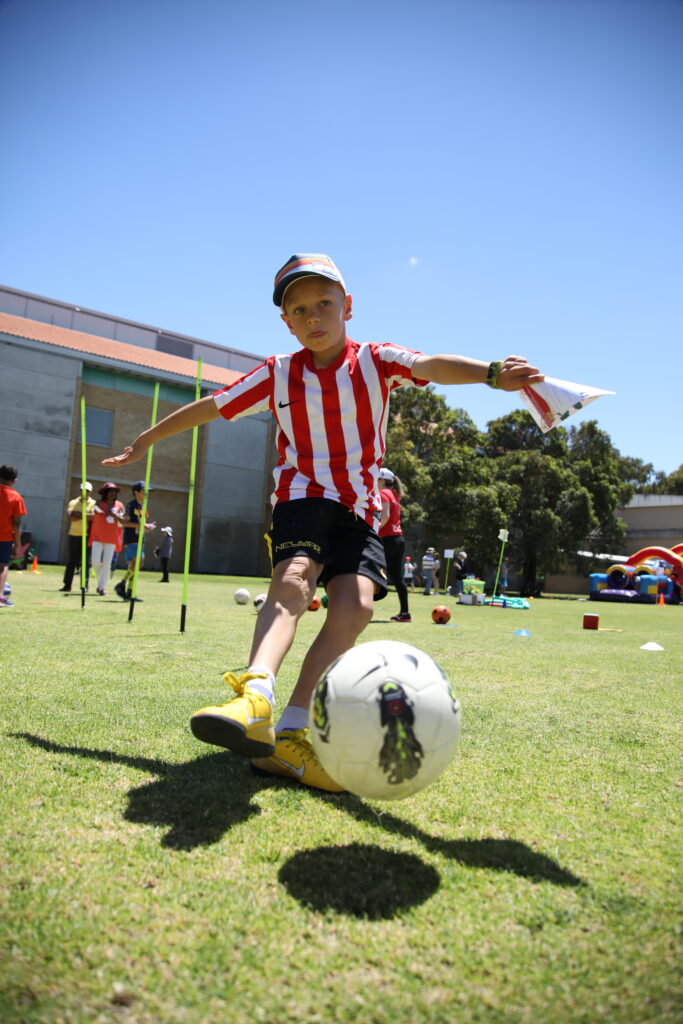
Research on grit has found that the trait most common among high achievers wasn’t natural talent, it was a combination of sustained passion and persistence toward long term goals. This matters for movement and exercise as much as it does for study or sport.
A child who keeps showing up to a session, even when a skill hasn’t clicked yet, is building the same underlying capacity that predicts success far beyond the gym or sports field.
‘Grit’ is less about natural ability and more about how a person chooses to grow, with effort treated as essential to improvement. For parents, this reframe can be useful in daily conversations. Praising the attempt and the return to practice, rather than only the outcome, helps a child associate difficulty with progress instead of failure.
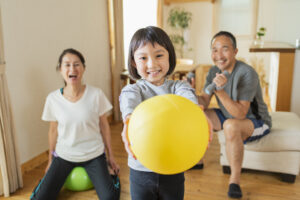
Young people decide early whether being active is for them, and much of that decision is social. Moving with people they trust, feeling that they belong, and seeing the adults around them being active all tell a child that this is a world they are part of. You do not need to be sporty yourself for this to work.
What matters is that movement is something your family does together and talks about warmly, rather than something a child is sent off to do alone.
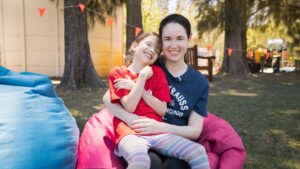
This is also where you have an advantage no coach or instructor has. You see your child across every setting, on good days and hard ones, and you know what helps them and what tips them over. That makes you the most important person in building your child’s physical literacy. The small, regular things carry the most weight: a walk after dinner, a kick of the ball in the backyard, or simply letting your child see you choose to move and enjoy it.
Our Parent Action Plan brings these ideas together into one simple plan you can use at home, built around our MAGIC approach to everyday movement: Motivation, Autonomy, Grit, Interconnected and Confidence.
Our Parent Action Plan, activity cards and other free resources are ready to download and use at home.
Browse our free resources →A child’s belief that they can have a go is one of the strongest things that decides whether they will. Our research with families found that when parents support a child’s activity, much of the benefit comes through confidence: the support helps a child feel capable, and feeling capable is what keeps them taking part. Confidence is built, and it grows through the way we respond when things are hard as much as when they go well.
A few habits make a real difference.
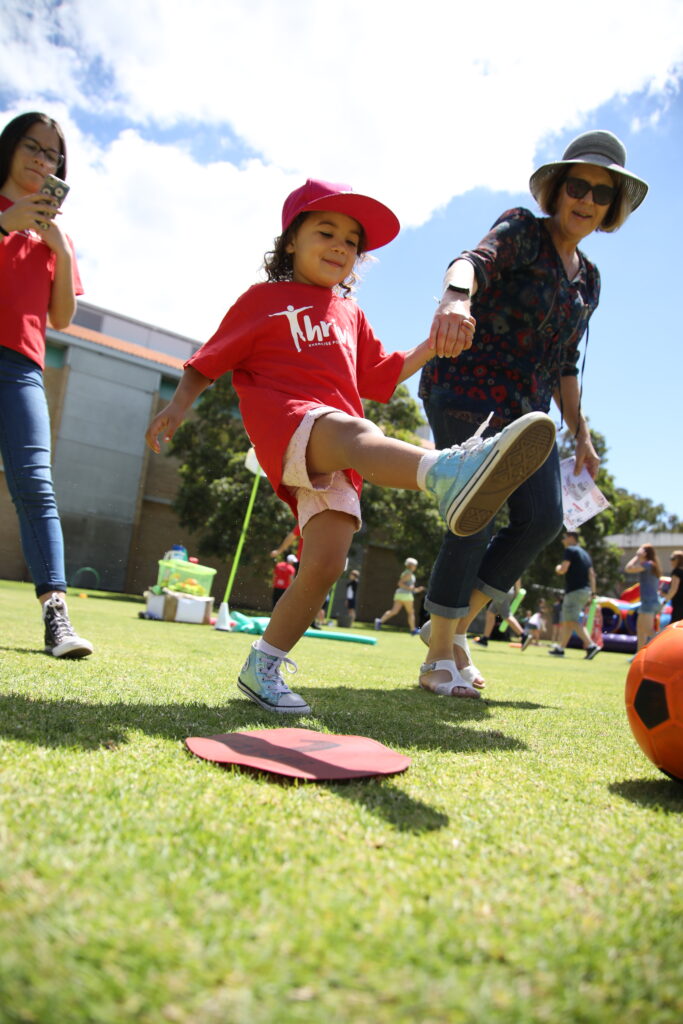
Four short reads on helping your child enjoy being active, one for each of the ideas that matter most.
Your child does not have to be sporty Skill is not what keeps a child moving for life. Motivation and confidence are, and any family can build them. The secret to a motivated child The motivation that lasts does not come from rewards. It comes from enjoyment and a genuine say. Why “good job” might not be helping Confidence is built through the words we use. A few small changes make all the difference. You are your child’s most important coach You see your child in all the moments that matter. That makes you their most important coach.Everything on this page is grounded in research led by our team and partners, including studies of how children develop movement skills, the part parents play in keeping children active, and a family program that improved both parents’ confidence and children’s physical competence over ten weeks. We have kept the language here plain and practical. If you would like to read the research itself, you can explore it through our research partner Mental Health & Exercise Research Group (MHEX) at University of Western Australia and University of New South Wales.
A three-part video series with Dr Kemi Wright on helping your child enjoy being active, built around the MAGIC framework. Work through it alongside your free Parent Action Plan.
Watch the series Download the Action PlanIf you would like support, our programs give children these same ideas in a fun, encouraging setting led by exercise professionals.
Send us a message, and we will help you find the right fit for your child.