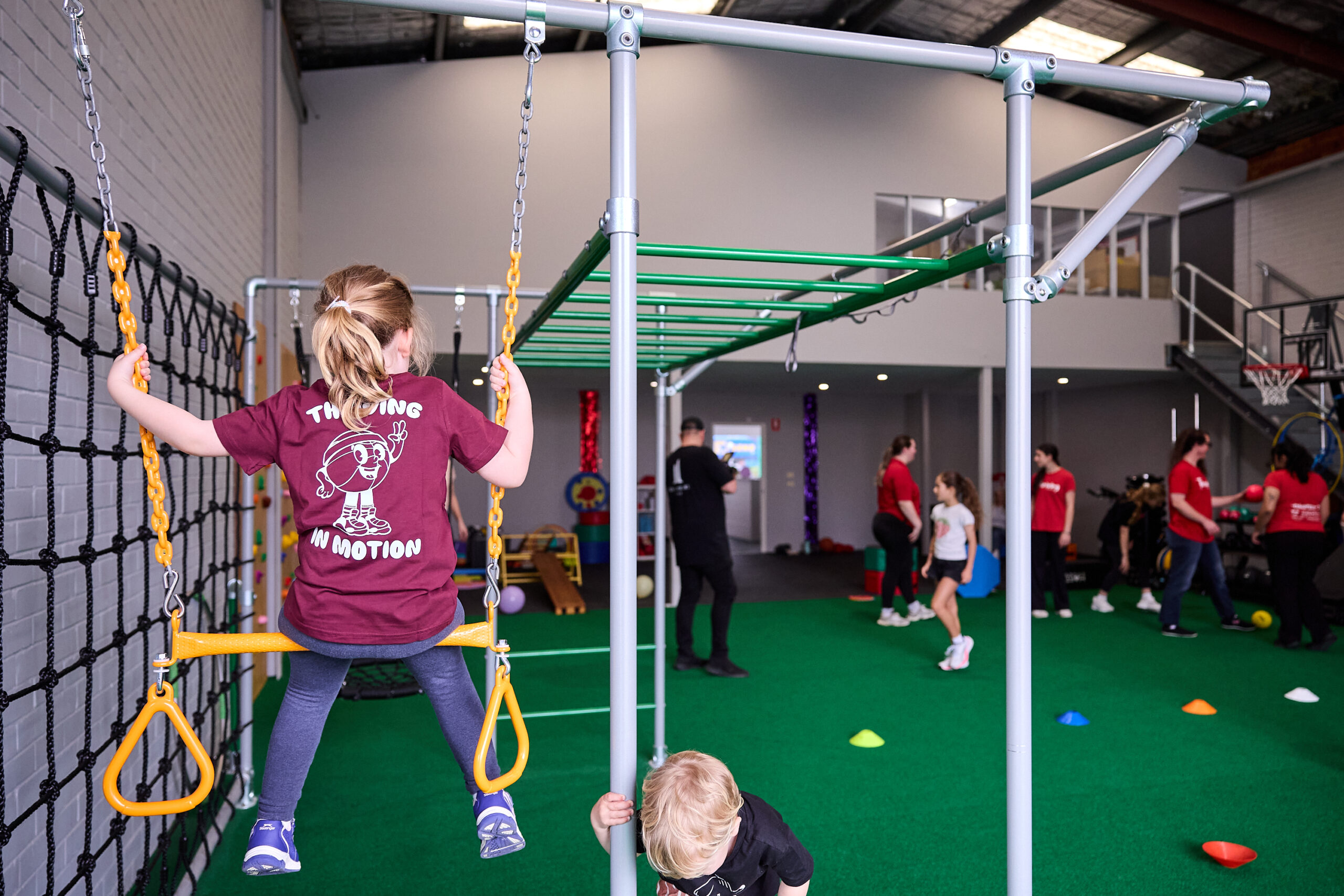
SPaCE, a Thriving in Motion program

Some kids hear every word and still miss the message.

SPaCE is a group exercise program for children who find it hard to make sense of sound, or of what they see. The difference is in the movement itself. Every activity is cued and set to rhythm, so children practise processing while they play.

Free for families Ages 7 to 12 Small groups Metro Perth
What SPaCE is

Not just exercise. Exercise with a cue.

SPaCE stands for Sensory Processing and Cued Exercise. It is a group program led by accredited exercise physiologists, where children move to sound, rhythm and visual cues instead of just running through drills.

Take the cues away and it is a good kids exercise class. Put them back, and every movement asks a child to listen, watch, and respond. That is what makes SPaCE different from ordinary sport or fitness. The sensory system gets a workout at the same time as the body.

SPaCE was developed by researchers at the University of Western Australia together with Thriving in Motion, and shaped with input from children and families.

Regular classMove, get fit, have fun
SPaCE addsCued movement
SPaCE addsMovement to rhythm
ResultA workout for body and sensory processing
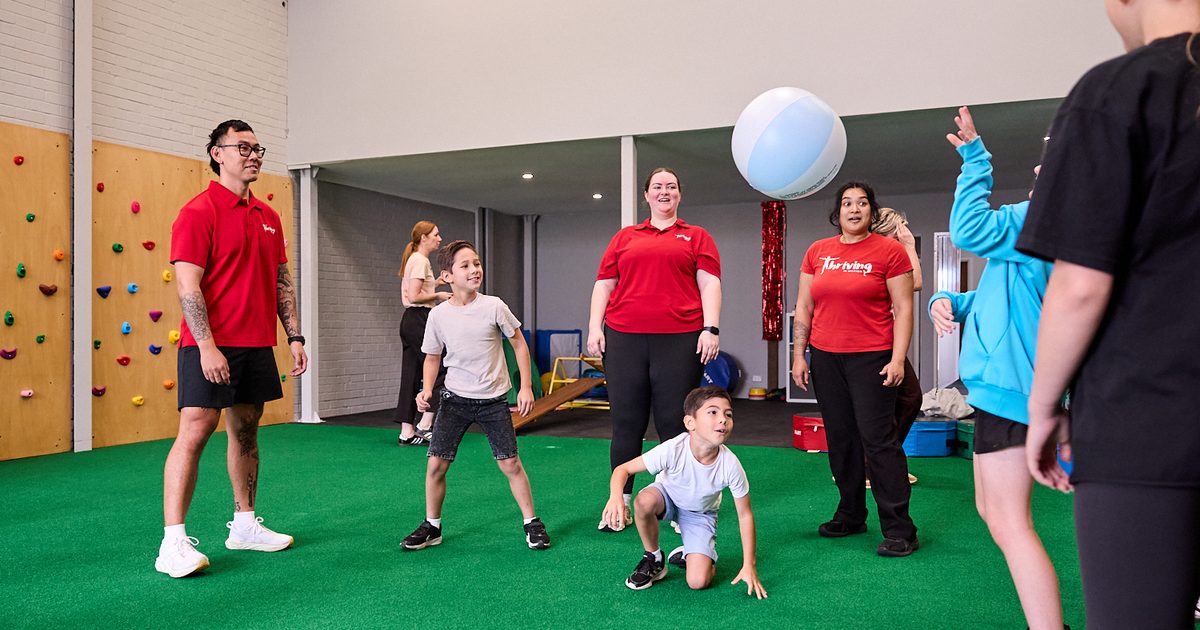
Children taking part in a SPaCE session
Who it is for

Children aged 7 to 12 who process the world a little differently.

SPaCE is for children who find it hard to process sensory information, even though their hearing and vision test as typical. If any of this sounds like your child, they may be a fit.

Making sense of sound

Auditory processing

They can hear, but the message gets lost, especially where there is background noise.

  • Mishears or misses instructions in a busy classroom
  • Often asks for things to be repeated
  • Tires quickly during listening tasks
  • Finds noisy places hard to follow
Making sense of what they see

Visual processing

Their eyes work, but organising and interpreting what they see takes extra effort.

  • Loses their place when reading or copying
  • Finds it hard to track or scan across a page
  • Struggles to judge space, distance or movement
  • Gets tired or frustrated with visual tasks

You do not need a formal diagnosis to enquire. Our team completes a short intake assessment when your child joins. If a formal diagnostic assessment would help and cost is a barrier, we have funding to help cover it.

How a session works

Two things make SPaCE, SPaCE.

Sessions run like an active, playful group class. Woven through every game are the two elements that set SPaCE apart.

Cued movement

Move on the signal

Children move in response to sounds, spoken cues and visual signals. Catch the cue, make the move. It turns processing what you hear and see into something active and fun, not a test.

Movement to rhythm

Move in time

Activities are set to music and beat. Children move in time, anticipate what comes next and adjust, giving the brain steady practice at organising sound and timing through the body.

The exercise underneath it all. Every session is built on real physical activity: aerobic games, strength and motor skills, adapted to each child. It is genuine exercise that happens to give the sensory system a workout too.
Why movement

Can moving really help a child process sound?

It is a fair question, and one a lot of families ask. The brain systems for movement, timing, attention and listening are closely linked, and there is good evidence that regular physical activity supports how children focus, think and learn. SPaCE is built on that foundation.

In our pilot, children who took part improved on measures of auditory processing. They were not starting from the couch either. They were already doing their usual school sport and play, which points to something about a structured, instructed program making the difference. We are careful not to lean too hard on one small study, and that is exactly why a larger trial is now underway to test how movement helps, and how much.

SPaCE, exercise and sensory processing information
What families can expect

The benefits of movement, for every child who comes.

Whatever brings a child to SPaCE, they get what good, regular movement gives any child. Physical activity builds strong, capable bodies, and it supports focus, mood, sleep and the confidence that comes from getting better at something. That holds for every child, and it is the foundation each session is built on.

Confidence and physical literacyStronger, more coordinated, and a better relationship with being active that can carry through life.

Focus and moodRegular movement helps children settle, concentrate and manage big feelings.

Social connectionSmall groups where children work alongside peers and feel they belong.

Support for familiesPractical ideas to carry the good habits into home and school.

SPaCE grew out of a completed pilot trial run with UWA. In that pilot, children attended and enjoyed most sessions, families found the twice weekly routine workable, and there were no serious safety concerns. A larger trial is now testing the approach more fully, with findings being prepared for publication. We update this page as the evidence is shared, and we are honest about what we know so far.

Where and when

Starting small in 2026, rolling out from January 2027.

SPaCE runs at community locations across metropolitan Perth. Children attend two 50 minute sessions a week in a small group of up to 14, and at each location we run two groups back to back on session days. Programs run continuously, so children can keep coming while it is helping. When a location fills up, we may cap places at 10 weeks so more families can start.

Oct to Nov 2026

Tester sessions

A first round of taster sessions as we get the program up and running.

From late 2026

Assessments open

We begin assessments to match children into groups ready for the new year.

From Jan 2027

Full roll out

Groups running continuously across metro locations, with rolling enrolment.

First locations

Balcatta Craigie More to come

Locations are being finalised. Register your interest and we will tell you as soon as a group is confirmed near you.

How to join

Getting your child into SPaCE.

Register your interest

Tell us a little about your child. It takes a couple of minutes and puts you on the list for a group near you. Families can come to us directly or through a referral from a GP, teacher or allied health professional. Both are welcome.

We get in touch

Our team talks through your child's needs and whether SPaCE is the right fit right now.

Intake assessment

Our team completes a short intake assessment to understand your child and match them into the right group. If a formal diagnostic assessment would help, we can point you to accredited practitioners, and there is funding to help families for whom cost is a barrier. At this assessment you will also be told about any research you can opt into. It is optional, and choosing not to take part does not affect your funded place.

Join a group

When a place opens near you, we match your child in and get them moving.

Register your interest in SPaCE

Taking part is free, funded so cost is not a barrier to getting started. Register now to hear when groups open near you. We will only contact you about SPaCE.

Prefer to talk first? Email hello@thrivinginmotion.org or call 0403 600 960.

Common questions

Good to know

Is SPaCE a research study?

No. SPaCE is a community program you can join through Thriving in Motion. Research runs alongside it, and at your child's assessment you can choose whether to take part. Taking part is always optional, and saying no does not affect your child's funded place in the program.

How can exercise help with processing sound or sight?

The brain networks for movement, timing and attention overlap with those a child uses to make sense of what they hear and see, and physical activity is well known to support focus and brain function in children. In our pilot, children in the program improved on auditory processing measures. A larger trial is now testing how movement helps, and how much.

How much does it cost?

Taking part is free, thanks to the Stan Perron Charitable Foundation. Programs run continuously, so your child can keep coming while it is helping. If a location fills up, we may cap places at 10 weeks so others can start, and paid options may be offered where demand is high. If a diagnostic assessment is needed to get started and cost is a barrier, we have funding to help.

Does my child need a diagnosis to take part?

No. You do not need a formal diagnosis to register your interest. Our team completes a short intake assessment to understand and match your child's needs. A formal diagnostic assessment is optional, and we can help with access and cost where needed.

What ages is SPaCE for?

SPaCE is designed for children aged 7 to 12, in line with the research it is built on.

How often would my child attend?

Two 50 minute sessions a week, in a small group of up to 14 children. Programs run continuously, so children can keep attending while it suits them. At each location we run two groups back to back on session days. When a location is full, places may be capped at 10 weeks so new children can start.

Is it safe for my child?

Sessions are run by accredited exercise physiologists and activities are adapted to each child's needs and abilities. A parent or carer is welcome to stay on site.

The research behind SPaCE

Built on evidence, and still learning.

SPaCE began as a research collaboration between the University of Western Australia and Thriving in Motion. A published trial protocol and a completed pilot showed the approach is feasible and safe for children, and a larger randomised trial is now testing how well it works and who it helps most. Findings from the pilot are being prepared for publication, and the research continues through UWA's MHEX team.

Research participation is always optional. When your child comes in for their intake assessment, you will be told about any research open at the time and can choose whether to take part. If you would rather not, your child still takes part in the funded community program, no change. If you do opt in, the research is run by the UWA research team, involves additional assessments and a longer commitment, and has its own separate consent process that sets out exactly what is involved before you decide anything.

Visit MHEX research →
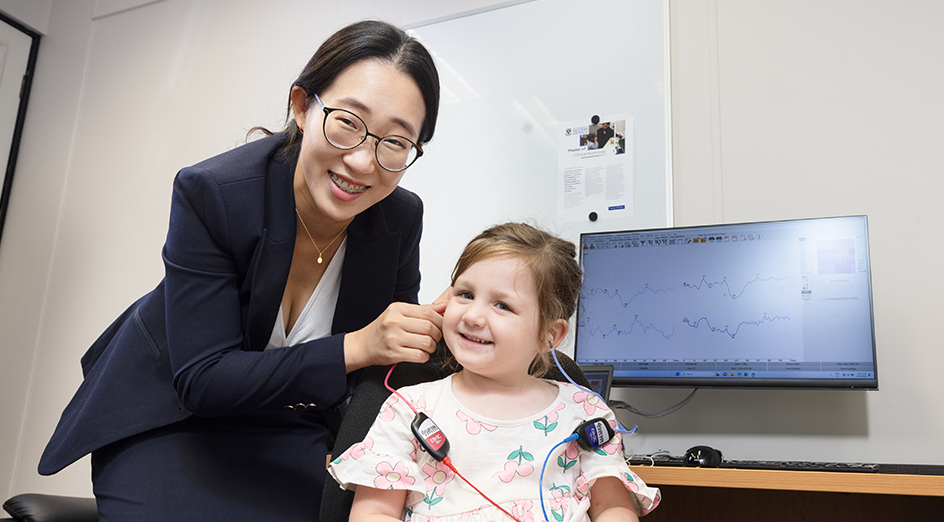
Dr Robyn Choi, audiology researcher at UWA
Who makes SPaCE possible

Funded for the community, delivered in partnership.

SPaCE is delivered by Thriving in Motion, made possible by the Stan Perron Charitable Foundation. The Foundation funds delivery of the community program so it can be offered free to families. It does not fund the associated research.