

Honours and Masters research projects with MHEX in 2027
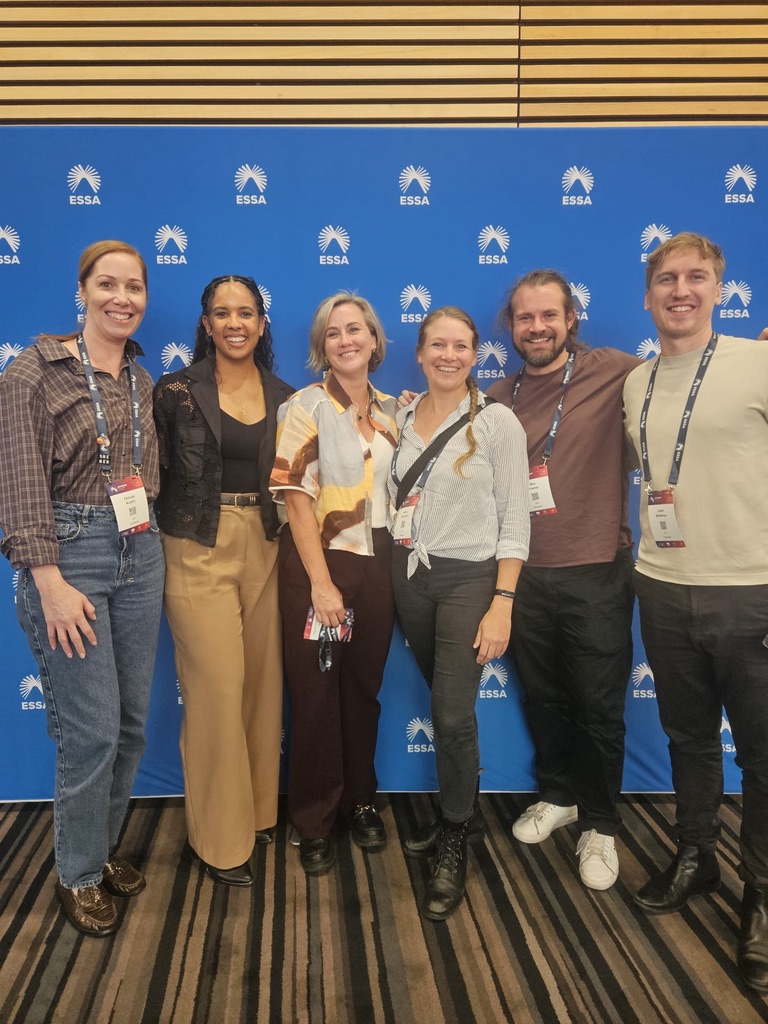
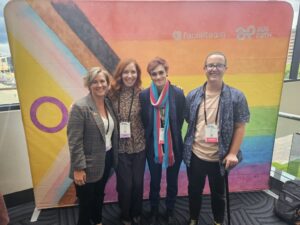
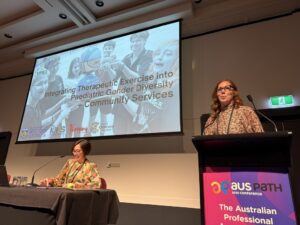
MHEX researchers at ESSA 2026
The Mental Health and Exercise Research Group (MHEX) is welcoming Honours and Masters students for 2027. We work where exercise science, clinical practice and mental health meet, with a focus on people who face the biggest barriers to being active or who are under-represented in research and care. Our hospital, community and lived experience partners help make sure the findings reach practice.
Students work alongside partners including Fremantle Hospital Mental Health Service, Perth Children’s Hospital and Thriving in Motion. Depending on the project, you can build skills in physiological testing, fNIRS, qualitative research and co-design. We support students to publish and present their work, and there is a pathway into PhD study for those who want it.
We don’t offer a fixed list of discrete studies. Each area below has several possible questions, and we shape the project with you to suit your degree, interests and timeline. Quantitative, qualitative and mixed methods options are available across most areas.
Interested in one of these areas?
Email mhex@uwa.edu.au or bonnie.furzer@uwa.edu.au with the area(s) you would like to explore and a line or two on why. All enquiries come to us, so there is no need to contact individual team members.
Eating disorders and maladaptive exercise: the role of sex, gender and culture
Eating disordersMental healthGender and cultureHealth services
Over one million Australians live with an eating disorder, and 40 to 80% experience maladaptive exercise such as compulsive exercise or exercise dependence. Alongside disordered eating it is linked to poorer prognosis, longer hospitalisation and higher risk of relapse. Supervised, non-compulsive exercise, by contrast, can support recovery.
Most of the evidence comes from studies of young, white, cisgender women. Far less is known about how sex, gender identity and cultural background shape eating disorders, relationships with exercise and experiences of care. That gap matters for trans and gender diverse people, men and boys, and culturally and linguistically diverse communities.
Project options include
- How maladaptive exercise presents across sex, gender and cultural groups, and whether current screening tools capture it
- Experiences of exercise and movement in eating disorder care for trans and gender diverse people or people from culturally diverse communities
- Evaluation of our exercise physiology led recovery program within adult mental health services
- Inclusive, recovery-focused practice training for exercise professionals
Status: Ethics approved; data available.
Suits: Clinical exercise physiology, psychology or public health students, with quantitative (screening tools) or qualitative (lived experience) options.
Find out more: Bonnie on Butterfly Foundation’s Let’s Talk podcast
Research team: Bonnie Furzer, Kemi Wright, Kai Schweizer (PhD Candidate), Conor Boyd, the Fremantle Hospital exercise physiology team and collaborators
Collaborators: Fremantle Hospital Mental Health Service
Stay connected with MHEX
Research updates, clinical tools, and news from the Mental Health and Exercise Research Group. Sent every 6(ish) weeks.
Chest binding, exercise and health: the next phase
Trans and gender diverse healthExercise physiologyThermoregulationLong-term health
Chest binding compresses chest tissue to create a flatter chest. It is common among trans and gender diverse people registered female at birth and can ease gender dysphoria and support wellbeing. Many guidelines still advise against exercising in a binder, largely without evidence, which can put people off being active.
In 2025 we completed one of the first studies of chest binding and physical function. The next phase links with Better Binding, a national NHMRC-funded project led by Murdoch Children’s Research Institute.
Project options include
- Long-term binder wearing and its effects on health, physical function and physical activity
- Thermoregulatory responses to exercise while wearing a binder
Status: Ethics approved.
Suits: Exercise physiology and sport science students keen on lab-based physiological and thermoregulation testing.
Find out more: Chest binding and exercise blog and video series
Research team: Bonnie Furzer (she/her), Brett Buist (he/him), Grant Landers (he/him), Claire Munsie (she/her), Ben Kramer (he/him, PhD Candidate), Kai Schweizer (they/he, PhD Candidate), Felicity Austin (she/her), Ben Quick (they/he)
Collaborators: Thriving in Motion, The Kids Research Institute Australia, Curtin University, Better Binding Study Team (Murdoch Children’s Research Institute)
SPaCE: cue-based exercise and sensory processing
ChildrenNeuroscienceSensory processingfNIRS
SPaCE is a supervised exercise program built around auditory and visual cues that children hear or see and respond to. Our pilot showed an early, promising signal for auditory processing. It is not proof, and a trial in children aged 7 to 12 is now testing it, including whether the cue and response pairing, rather than exercise alone, is the active ingredient. A separate study in adults is also getting under way.
Project options include
- Visual processing outcomes following cue-based exercise
- Using functional near-infrared spectroscopy (fNIRS) to explore brain activity during cue-based exercise
- Auditory and visual processing in adults
Status: Ethics approved; data available.
Suits: Neuroscience, psychology or exercise science students interested in brain imaging (fNIRS) and sensory or cognitive testing.
Find out more: SPaCE pilot paper
Research team: Bonnie Furzer, Robyn Choi, Chris Zhou (PhD Candidate), Kevin Gao (PhD Candidate)
Collaborators: Thriving in Motion (program delivery)
Move with Me: activity buddies for child and youth mental health
Youth mental healthPhysical activityPeer supportCo-design
Being active supports mental health, but starting and keeping going alone is hard, particularly for the young people who face the most barriers. Move with Me pairs children and young people experiencing, or at risk of, mental ill-health with a chosen exercise buddy (a peer, mentor, family member or support worker) to be active together in their community.
The model is being co-designed with young people, families and community partners, with a focus on neurodivergent, LGBTIQA+ and culturally diverse young people and those living with disability.
Project options include
- Co-design of how buddies are recruited, matched, trained and supported
- Experiences of socially supported activity for young people and their buddies
- Digital tools and wearables for check-ins and encouragement
- Wellbeing, social connection and help-seeking outcomes in early pilots (subject to funding)
Status: Ethics in progress, expected early 2027.
Suits: Exercise science, psychology, public health or health promotion students interested in co-design and qualitative methods.
Research team: Bonnie Furzer, Kemi Wright, Ben Quick and national collaborators
Collaborators: Thriving in Motion, with university and community partners across Australia
Physical literacy and wellbeing in children with hypothalamic dysfunction
ChildrenPhysical literacyEndocrinologyMultidisciplinary care
Damage to the hypothalamus, from brain tumours such as craniopharyngioma and their treatment, genetic conditions or other causes, can lead to rapid weight gain, reduced energy expenditure, fatigue and poorer quality of life. There is no consistently effective medical treatment, and very little is known about how these children move, play and take part in activity.
Working with Perth Children’s Hospital Endocrinology, this study looks at physical literacy, activity, fitness and wellbeing, and at the community-based, multidisciplinary support children and families want.
Project options include
- Physical literacy, fitness, motor competence and quality of life compared with population norms
- Needs and preferences of families and clinicians for community-based support
- Education and recommendations on physical activity and nutrition for families and health professionals
Status: Ethics in progress, expected early 2027.
Suits: Clinical exercise physiology, paediatric health or nutrition students, with fitness and physical literacy assessment or interview-based options.
Research team: Bonnie Furzer, Kemi Wright, Felicity Austin, Ben Kramer (PhD Candidate), Ashley Almarjawi and collaborators
Collaborators: Perth Children’s Hospital Endocrinology, Western Kids Health, Thriving in Motion
Supported by: Stan Perron Charitable Foundation
Bone, Muscle and Balance (BoMB): high intensity and impact training for older adults
Healthy ageingExercise physiologyExercise prescriptionImplementation
Age-related changes in balance and neuromusculoskeletal health raise the risk of injurious falls and make daily activities harder. High intensity resistance and impact training improves musculoskeletal health, but little is known about its broader effects on health and wellbeing, or whether it works outside the gym. BoMB examines the feasibility of this training in community settings and its effects on falls, daily function, neuromusculoskeletal function and quality of life.
Project options include
- How much ‘impact’ is impact training?
- Getting out of the gym: feasibility and outcomes of high intensity and impact training in community (non-gym) settings
- Barriers and facilitators of high intensity impact training in older adults
- Feasibility of play-based impact training
Status: Ethics in progress, expected early 2027.
Suits: Exercise physiology, sport science or biomechanics students interested in strength, balance and impact testing with older adults.
Research team: Brett Buist, Ben Kramer (PhD Candidate), Grant Landers, Marion Mundt (Edith Cowan University), Bonnie Furzer, Kemi Wright and collaborators
Other areas, or your own idea
We are happy to talk about projects across our wider work, including:
- Youth Moves, gender-affirming exercise for trans and gender diverse young people (project page)
- Stride, mentor-supported exercise for university students experiencing mental health challenges (read about Stride)
- Neurodivergent health and physical activity
- Children’s physical literacy and sport
- Hospital-based exercise physiology in mental health services
Have an idea that sits where exercise and mental health meet? Get in touch at mhex@uwa.edu.au. Our team, publications and news are all at thrivinginmotion.org/mhex.
About MHEX. The Mental Health and Exercise Research Group, co-led by Associate Professor Bonnie Furzer (UWA) and Associate Professor Kemi Wright (UNSW), works across research, clinical practice and community delivery to build the evidence for exercise in mental health care.
Stay connected with MHEX
Research updates, clinical tools, and news from the Mental Health and Exercise Research Group. Sent every 6(ish) weeks.