Beyond the Binary: New Research Reveals How Gender Identity Shapes Eating and Exercise in Trans Adults
Published in April 2026 in Psychology of Sexual Orientation and Gender Diversity, the study by Kai Schweizer, Bonnie Furzer and team is one of the most comprehensive mixed-methods investigations to date of eating and exercise motivations and behaviours in trans adults.
For many trans and gender diverse people, the relationship with food and movement is anything but straightforward. A new peer-reviewed study from researchers at the University of Western Australia, The Kids Research Institute Australia, and Thriving in Motion sheds light on just how complex, and deeply personal, these relationships can be.
Who Took Part in the Study?
158 trans and gender diverse adults participated, with a mean age of 22.8 years. The majority (75.9%) identified as non-binary, with 19.6% identifying as trans men and 3.2% as trans women. Participants were recruited globally, representing 25 countries, with most from Australia and the United States.
Strikingly, 88% of participants identified as neurodivergent, and 65.2% identified as Autistic, a reminder that trans health research must account for the complex intersectionality of gender diversity and neurodivergence.
158 participants across 25 countries
75.9% were non-binary
88% identified as neurodivergent
65.2% identified as Autistic
37.3% of participants reported a lifetime eating disorder diagnosis. 32.3% scored above the clinical threshold for current eating disorder symptoms.
Key Findings
Eating disorder rates are high.
Over a third of participants had received a lifetime eating disorder diagnosis, and nearly one in three was experiencing clinical-level symptoms at the time of the survey. This places the sample among the higher rates reported in trans populations in the literature.
Compulsive exercise is present and linked to eating disorder risk.
15.2% of participants met the clinical threshold for compulsive exercise, a rate notably higher than many earlier estimates. Those who met this threshold were significantly more likely to also have an eating disorder diagnosis.
Binary gender identity was associated with higher risk.
Participants with a binary gender identity (trans men or trans women) had higher odds of compulsive exercise compared to non-binary participants. This nuanced finding underscores the need to move beyond simplified group comparisons.
Compulsive exercisers showed different motivational profiles, especially in introjected regulation, suggesting exercise driven by guilt, self-worth, and social approval rather than genuine enjoyment.
The Human Experience: Four Qualitative Themes
Beyond the numbers, 87% of participants shared written reflections on how their gender identity shaped their relationship with food and movement. Four powerful themes emerged:
Gender Identity and Drivers of Behavior: Participants described a spectrum of influence — from gender playing no role in their eating or exercise, to it being a direct driver (e.g., restricting food to suppress secondary sex characteristics, weightlifting to masculinize the body), to it operating as a secondary influence through minority stress, anxiety, and disconnection from the body.
Environment and Safety: Many participants wanted to exercise but faced real barriers: binary changing rooms, gendered sports teams, and fears for personal safety in gyms. As one participant put it, they were “forced to conform to either male or female sports, and I am neither.”
Life Stages and Key Transitions: Puberty and gender transition emerged as periods of heightened vulnerability. Several participants described how gender-affirming care (e.g., hormones, surgery) helped improve their relationship with food and exercise, while the inaccessibility of such care increased risk.
Perceived Norms and Social Desirability: Participants across gender identities described pressure to conform to gendered body ideals, whether the “skinny, hairless twink” standard for trans men, or feminine thinness for trans women. Even within non-binary spaces, narrow body ideals were present.
Why This Matters for Care
This research has direct implications for clinicians, exercise professionals, and support workers. The findings highlight that eating and exercise behaviors in trans adults are shaped by a complex web of gender, neurodivergence, mental health, social norms, and access to affirming care, not by gender identity alone.
A one-size-fits-all approach to eating disorder prevention or treatment will miss the mark. The study calls for individualized, person-centered, and gender-affirming approaches that actively consider the diverse experiences of trans and gender diverse people.
Implications for the Exercise Profession
Exercise professionals have a critical role to play. Creating gender-affirming gym environments, understanding the links between compulsive exercise and eating disorders in this population, and being aware of the motivational patterns that underlie disordered exercise behaviors are all essential competencies going forward.
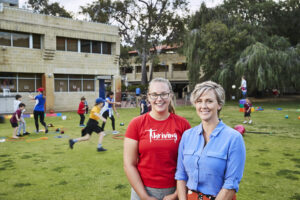
The Research Team: This work was supported by the Australian Government National Leadership in Mental Health Program — National Eating Disorder Research Centre (IgnitED) and represents a collaboration between the University of Western Australia, The Kids Research Institute Australia, the University of New South Wales, and the clinical program Thriving in Motion.
Full Paper: Schweizer, K., Mundt, M., Austin, F., Buist, B., Wright, K., Strauss, P., Lin, A., Jackson, B., Wilkinson, K., & Furzer, B. (2026). Eating and exercise motivation and behaviors in trans and gender diverse adults: A mixed methods study. Psychology of Sexual Orientation and Gender Diversity. Advance online publication. https://dx.doi.org/10.1037/sgd0000910
The MHEX Team acknowledges all Aboriginal and Torres Strait Islander Traditional Custodians of Country and recognises their continuing connection to land, sea, culture and community. We pay our respects to Elders past, and present.
We are committed to embracing diversity and eliminating all forms of discrimination through education and inclusive communities. We welcome all people and are respectful of individual identities.