



Stride at UNSW: peer-led exercise for student mental health, from trial to translation
When a research trial works, the harder question is what happens next. Stride, the peer-led exercise program developed by our team at the University of Western Australia, has been running at UNSW since 2024, and a new UNSW Societal Impact Framework case study sets out what that translation has looked like on the ground. For clinicians, referrers and student support services, it is a clear picture of how structured exercise moves from evidence into routine care.
What Stride is
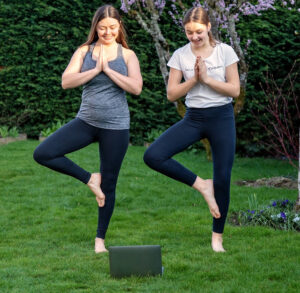
Stride is a 12-week peer-led physical activity program for university students experiencing mental health challenges. Sessions run twice a week at the UNSW Fitness and Aquatic Centre and on campus. They are delivered by third and fourth year Exercise Physiology and Physiotherapy students, supervised by an Accredited Exercise Physiologist, as part of a work-integrated learning placement. Participants meet with the same peer mentor each week, which builds routine and a relationship alongside the exercise itself.
The program began at UWA in 2020 and expanded to UNSW in 2024. It now sits within the Mental Health and Exercise (MHEX) Research Group, a collaboration across UNSW, UWA, the Kids Research Institute Australia and Thriving in Motion. At UNSW it is led by Associate Professor Kemi Wright, with the case study authored by A/Prof Wright and Emma Suzuki.
What the case study shows
The report is framed around translation and impact rather than trial outcomes, so it is most useful for what it tells us about reach, integration and workforce development.
Reach and adoption
Stride has scaled beyond its original campus to multiple universities, with more than 200 students experiencing mental health challenges supported to date. At UNSW, 67 students had taken part as of June 2026. This is one of the clearer examples of an exercise-based mental health program moving from a single-site trial into sustained multi-site delivery in Australia.
Referral integration
In 2025, 42 per cent of UNSW participants were referred from the UNSW Health Service, and expressions of interest rose by 188 per cent across the year. For referrers, that positions Stride as a non-clinical pathway that runs alongside existing care rather than competing with it, which matters for students who find counselling or clinical services harder to approach.
Workforce development
Stride has delivered 1,845 hours of work-integrated learning for 20 student mentors, and 82 per cent of mentors reported the placement developed their clinical skills. The program trains the next generation of exercise physiologists and physiotherapists in mental health practice at the same time as it supports participants, which is its strongest structural feature.
The case study also reports preliminary pre-to-post improvements in depression, anxiety and stress on the DASS-21, along with self-reported quality of life. These are early, uncontrolled findings from program monitoring rather than trial results, so they are best read as an encouraging signal alongside the published evidence below, not as effect estimates in their own right.
Stay connected with MHEX
Research updates, clinical tools, and news from the Mental Health and Exercise Research Group. Sent every 6(ish) weeks.
What this means for practice
For referrers and student support teams, Stride offers a lower-stigma, relationship-based option that connects formal care with everyday wellbeing support. For the exercise profession, it reflects a wider shift: mental health is now among the top five primary areas of practice for Accredited Exercise Physiologists, and the 2026 ESSA consensus statement sets out their role in supporting people with lived experience of mental health challenges.
The case study describes the translation. The evidence base that clinicians and academics can cite sits in the peer-reviewed literature. The Stride feasibility trial reported pre-to-post change across 114 participants, with the implementation background and a more recent study of exercise enjoyment and depressive symptoms adding to the picture. Links to all three are below.
In 2025, 42 per cent of UNSW participants came through the university health service, positioning Stride as a bridge between clinical care and everyday wellbeing support.
Read the report and the evidence
The full UNSW Societal Impact Framework materials:
The peer-reviewed Stride evidence base:
- Jeftic, I., Furzer, B., Dimmock, J. A., Wright, K., Budden, T., Boyd, C., Simpson, A., Rosenberg, M., Sabiston, C., de Jonge, M. & Jackson, B. (2023). The Stride program: Feasibility and pre-to-post program change of an exercise service for university students experiencing mental distress. Psychology of Sport and Exercise. doi.org/10.1016/j.psychsport.2023.102507
- Jeftic, I., Furzer, B. J., Dimmock, J. A., Wright, K., Boyd, C., Budden, T., Rosenberg, M., Kramer, B., Buist, B., Fitzpatrick, I., Sabiston, C., de Jonge, M. & Jackson, B. (2023). Structured exercise programs for higher education students experiencing mental health challenges: Background, significance, and implementation. Frontiers in Public Health, 11, 1104918. doi.org/10.3389/fpubh.2023.1104918
- Jeftic, I., Jackson, B., Rebar, A., Furzer, B., Dimmock, J., Budden, T., Wright, K., Boyd, C., Rosenberg, M., Sabiston, C. M., de Jonge, M. L. & Simpson, A. (2026). Exercise enjoyment and depressive symptoms for university students in a mental health service: An intensive repeated measures study. Journal of Applied Sport Psychology. doi.org/10.1080/10413200.2026.2686714
Stay connected with MHEX
Research updates, clinical tools, and news from the Mental Health and Exercise Research Group. Sent every 6(ish) weeks.