Contributors: Wenbo (Chris) Zhou, UWA PhD Candidate, supervised by A/Prof Bonnie Furzer, Dr Robyn Choi, and A/Prof Kemi Wright.
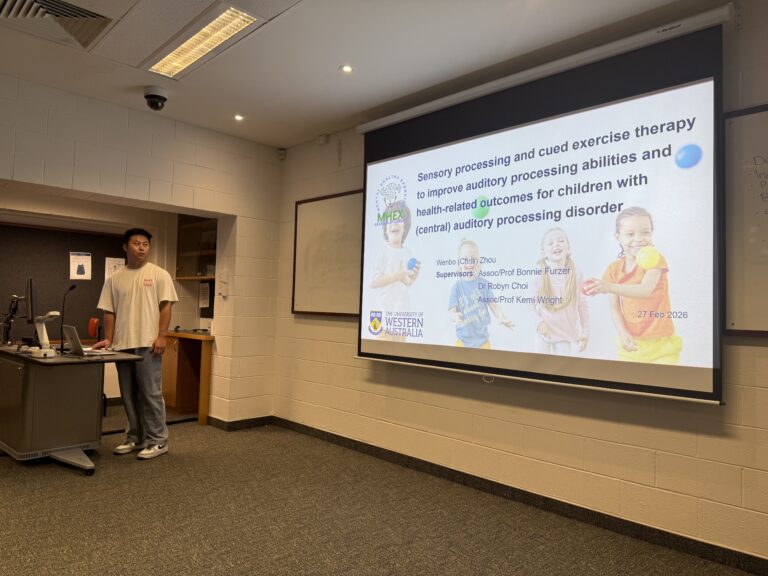
A new doctoral research project is underway at UWA, and we are excited to introduce the work of PhD Candidate Chris (Wenbo) Zhou, who joins the MHEX team investigating exercise as a tool to support children with (Central) Auditory Processing Disorder, or (C)APD.
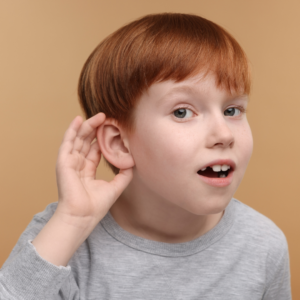
(Central) Auditory Processing Disorder is an umbrella term for difficulties in how the brain processes sound, despite normal peripheral hearing. It is estimated to affect 3 to 7% of school-aged children in the general population, and higher rates have been reported among Aboriginal and Torres Strait Islander children. (C)APD frequently co-occurs with other neurodevelopmental conditions, including ADHD (around 50%), autism spectrum disorder (around 70%), and dyslexia (25 to 70%).
Children with (C)APD can find it difficult to follow speech in noisy environments like classrooms, and may experience challenges with academic performance, concentration, and social participation. Current treatment options, such as listening devices and auditory training programs, can be effective but are often costly, complex to deliver, and do not always address the broader cognitive, social, and emotional needs of children with the condition.
Research has shown that physical activity can support brain development, improve cognitive function, attention, and executive functioning, and strengthen auditory plasticity. Exercise is also a recognised intervention for conditions that commonly co-occur with (C)APD, including ADHD and autism spectrum disorder. There is a strong rationale for investigating whether exercise could be a useful, accessible, and scalable tool for children with (C)APD, and that is exactly what this project sets out to examine.
Chris’s research centres on an intervention developed by the MHEX team at UWA called Sensory Processing and Cued Exercise (SPaCE) Therapy. SPaCE combines physical exercise with structured auditory cues, including music, rhythmic patterns, and start-stop cues. By engaging both sensory processing and higher-order cognitive systems simultaneously, SPaCE brings together elements of both bottom-up and top-down approaches that are typically delivered in isolation.
A pilot trial of SPaCE has already been completed, with findings demonstrating feasibility and preliminary effectiveness. Chris’s PhD builds on this foundation.
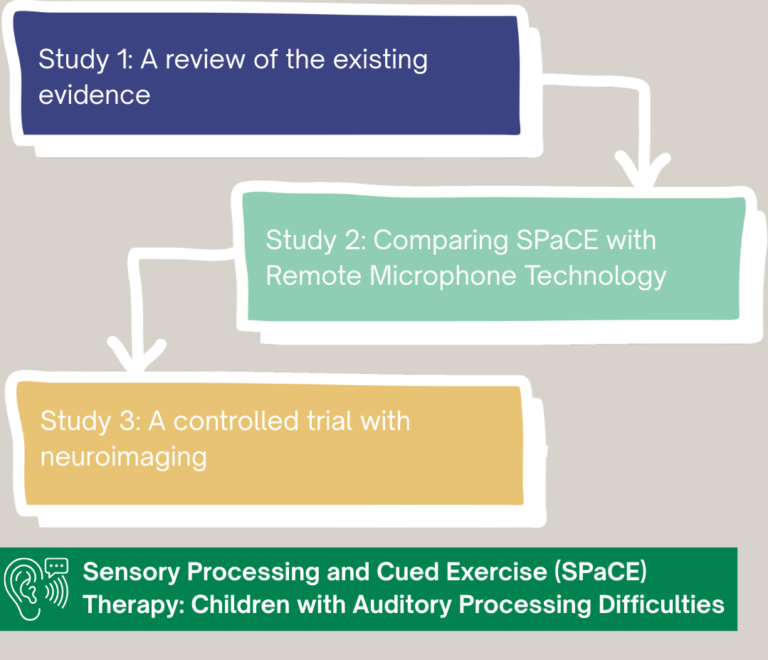
Chris’s doctoral project comprises three interconnected studies to be conducted from 2026 through to 2029:
The first study will map existing research on physical activity, sport, movement, and exercise in relation to auditory processing, school performance, physical literacy, and quality of life in children with (C)APD. The findings will directly inform the design and focus of the studies that follow.
The second study compares the effects of auditory cued exercise with remote microphone technology, the current gold standard treatment for (C)APD, on auditory processing abilities and quality of life in children aged 7 to 12. Data for this pilot study have already been collected as part of the broader SPaCE pilot trial, and Chris will undertake the analysis as part of his candidature.
The third and most ambitious study is a six-month randomised controlled trial examining the effects of SPaCE therapy on auditory processing, school performance, physical literacy, and quality of life in children with (C)APD. What makes this study particularly novel is the inclusion of functional near-infrared spectroscopy (fNIRS), a non-invasive neuroimaging tool, to examine whether and how SPaCE therapy changes patterns of brain activity during listening tasks. This will provide objective evidence of the neural mechanisms underlying any changes observed.
Children in the SPaCE group will participate in a bi-weekly 50-minute exercise program over two school terms, with all sessions delivered by Exercise Physiologists and designed around the M.A.G.I.C framework to support motivation, confidence, and engagement with physical activity.
The cost of treating (C)APD and its associated conditions in school-aged children in Western Australia alone is conservatively estimated at between $31.9 million and $69.3 million annually. Effective, accessible, and holistic intervention options are urgently needed. If SPaCE proves effective, it could offer a practical, scalable approach that addresses not just auditory processing, but also school participation, physical literacy, and overall quality of life.
This project is also one of the first to examine the neurophysiological effects of exercise-based therapy for (C)APD using brain imaging, and its findings have the potential to contribute meaningfully to how we understand and treat auditory processing difficulties in children.
Chris’s research will run through to 2029, with publications expected across this period. If you would like to stay informed about his work and the broader MHEX research programme, subscribe via the MHEX website
The MHEX Team acknowledges all Aboriginal and Torres Strait Islander Traditional Custodians of Country and recognises their continuing connection to land, sea, culture and community. We pay our respects to Elders past, and present.
We are committed to embracing diversity and eliminating all forms of discrimination through education and inclusive communities. We welcome all people and are respectful of individual identities.