The research, recently published in the International Journal of Transgender Health, has for the first time captured and analysed qualitative perspectives from the voices of Australian trans adults, leading to recommendations such as improving exercise programs and changing diagnostic screening for eating disorders.
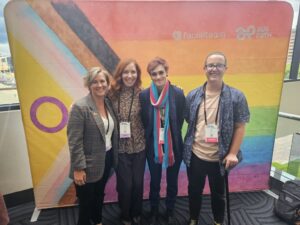
The work comes from a collaboration between the University of Western Australia’s School of Human Sciences (Exercise and Sport Science), Thriving in Motion, and the Kids Research Institute Australia.
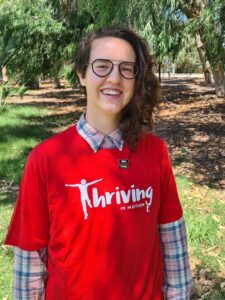
Lead author and UWA PhD Candidate Kai Schweizer said the research team interviewed 25 people who were either a trans Australian/person or a healthcare provider with experience in trans health, or both. From analysis of the responses, the team found three key overarching and interconnecting themes that contribute to both healthy and harmful eating and exercise behaviours: gender affirmation, neurodivergence and environmental influences.
“Trans health research is incredibly limited. There’s hardly any Australian data on eating disorders and trans people, which is astonishing, as what we eat and how we exercise are inherently societally gendered in many ways,” Mx Schweizer said.
“In our work, we not only identified unique risk factors that lead to complicated relationships with eating and exercise, but for the first time we were able to uncover how these could have unique, interconnected presentations.
“For example, we know from past research that there’s a high co-occurrence of gender diversity and neurodivergence. However, we found that healthcare services rarely consider how being both trans and neurodivergent can interact to shape people’s experiences and needs.
“Instead, these factors are typically treated in isolation, meaning that services often fail to meet the needs of either group, and especially those who sit at their intersection.”
Mx Schweizer said around 31 per cent of trans people currently have an eating disorder compared to about 2 per cent of cisgender people.
“When there are so many legal and financial barriers to gender affirming medical care, it makes sense for trans people to turn to disordered eating or exercise to embody their gender more fully,” he said.
“However, one thing we find is that up to 80 per cent of trans people with eating disorders are undiagnosed. The current screening tools weren’t designed with trans people in mind, which means many don’t meet the thresholds required to access an eating disorder care plan, even when they’re very unwell.”
“We’re hoping insights from this research and my PhD will help make much needed changes to the diagnostic screening of eating disorders for trans folks and build up knowledge for more targeted treatment.”
Co-author and operations manager at Thriving in Motion Felicity Austin said multidisciplinary care was needed to make a real difference to trans young people.
“It’s about working together, not being so siloed and making care specific to them,” Ms Austin said.
“It seems really basic, but there is definitely a lack of understanding amongst clinicians that tailored approaches for treatment are essential for avoiding unhealthy behaviours.”
She said her team are already making major changes to the way they work with trans young people as a result of this research.
“We have built a safe space to allow them to be physically active, by delivering exercise programs with lived-experience exercise instructors, and we’re educating and up-skilling the wider community on our positive experiences,” she said.
Mx Schweizer and Ms Austin are working on another study that measures the severity of eating disorders and compulsive exercise in trans people and connects this with their experiences.
This paper, titled Eating and exercise experiences of Australian trans and gender diverse folks: lived experience and stakeholder perspectives was supported by an IgnitEd Seed Grant through the Federal Government’s National Leadership in Mental Health Program–Australian Eating Disorder Research and Translation Centre.